“Het is een teken van een ontwikkelde geest om met een gedachte te kunnen spelen zonder die te accepteren.” — Aristoteles https://www.freethinker.nl/forum/
Af en toe maar naar mijn waarneming steeds vaker komt er op dit forum een onderwerp voorbij waarin vliegtuigen van de Tweede Wereldoorlog een rol spelen.
Ik heb zelf al jarenlang meer dan gemiddelde belangstelling voor WOII vliegtuigen.
Hier mijn eerste vliegtuigverhaal.
De link naar zijn levensverhaal. Heinrich Prinz zu Sayn-Wittgenstein
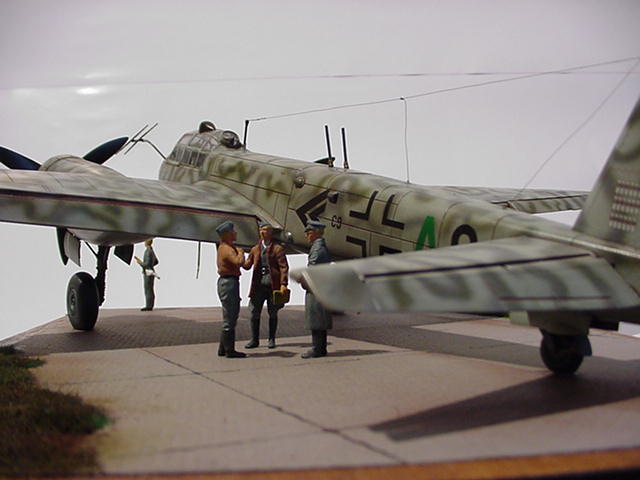
Hij vloog bij voorkeur in een Junkers Ju-88. Hij was een tijdje gestationeerd op vliegveld Gilzen-Rijen.
Zijn score was bij zijn dood 21 januari 1944 een totaal van 83 neergeschoten vijandelijke vliegtuigen. In nog een 1.5 jaar tijd.
Bij de laatste missie explodeerde er iets in één van de motoren. Wat is nooit precies duidelijk geworden, de kanonskogel kan net zo goed uit een Engels Mosquito vliegtuig als uit een Duits 88 mm geschut vanaf de grond gekomen zijn.
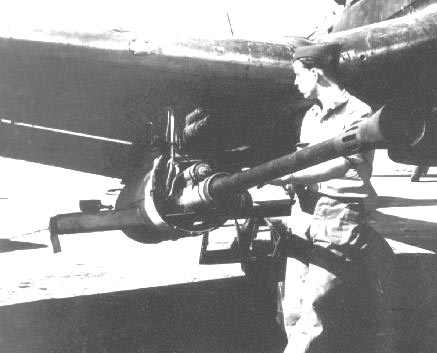
Building his scores on the Western Front, Wittgenstein was eventually shipped back to the East were as Kommandeur of 1./NJG 100 he became enthusiastic about the idea of upward-firing guns. Wittgenstein improvised his own oblique gun installation and it became his preferred method of attack--stalking the bomber target from below to shoot into its belly or the underside of the wing. Oddly enough, the Prince's night vision wasn't all that good and he often relied on his Funker to watch out of the cockpit for him when following a target visually.
Opmerkelijk is het verhaal dat deze meneer in 1943 het wilde plan had om zichzelf met een zware bom in de nabijheid van Hitler op te blazen.
Wil je dit fraaie vliegtuig van de Duitse aas nabouwen dan kan dit.
Dit toestel is zowel 1/72 als 1/48 te koop.
Een mooie maar redelijk prijzige 1/72 kit!
Maar waar weer wel decals bijgeleverd worden voor 4 verschillende vliegtuigen.
Markings: •IV./NJG5 Kommandeur Hauptmann Heinrich Prinz zu Sayn-Wittgenstein Code:C9+AE May,1943 FuG202/212 radar
•IV./NJG5 Kommandeur Hauptmann Heinrich Prinz zu Sayn-Wittgenstein Code:C9+DE Beg.1943 FuG202/212 radar
•NJG2 Kommodore Major Heinrich Prinz zu Sayn-Wittgenstein Code:R4+XM Jan.,1944 FuG202/212 radar + FuG220 SN-2 radar w/slanting gun
•8./NJG2 Code:4R+AS 1943-44 FuG220 SN-2 radar w/slanting gun
Re: De luchtoorlog boven Europa 1939-1945.
Geplaatst: 19 jun 2013 17:16
door Jagang
Cluny, waarom staat dit onder "ethische dilemma's", en niet in het subforum "techniek"?
Wellicht dat je daar dan ook nog andere zaken aantreft die je interesseren.
Re: De luchtoorlog boven Europa 1939-1945.
Geplaatst: 19 jun 2013 19:58
door Fish
Jagang schreef:Cluny, waarom staat dit onder "ethische dilemma's", en niet in het subforum "techniek"?
Wellicht dat je daar dan ook nog andere zaken aantreft die je interesseren.
Verplaatst naar techniek.
Re: De luchtoorlog boven Europa 1939-1945.
Geplaatst: 20 jun 2013 03:31
door Jagang
Een vliegtuig dat mij bijblijft, al was het maar om het geluid, is de Stuka.
De Stuka was een duikbommenwerper van de nazi's, en de toestellen hadden sirene's die tijdens het duiken een angstaanjagend geluid maakten.
De luchtoorlog werd dus niet alleen fysiek, maar ook psychologisch uitgevochten.
Je zou maar ergens op straat lopen, en opeens dit geluid boven je horen....
Re: De luchtoorlog boven Europa 1939-1945.
Geplaatst: 20 jun 2013 06:50
door Peter van Velzen
Ik was even verbaasd. Het ziet er op het eerste gezicht helemaal niet als een jachtvliegtuig uit. Ik heb van Wikepedia inmiddels begrepen dat de geallieerde piloten dat - tot hun grote schade - dat ook dachten . . . .
Re: De luchtoorlog boven Europa 1939-1945.
Geplaatst: 20 jun 2013 07:14
door Cluny
Schräge Musik!
Method of sighting guns[edit]
In the Ju 88 G-6 night fighter, which was both fast and manouevrable, the Revi 16N gunsight was modified to allow the pilot to aim at the target by placing a reflecting mirror above the pilot’s head, parallel to a similar mirror placed behind the actual gunsight (where the eye would normally be) which itself was further to the rear, functioning together in the manner of a periscope. The Ju 88 G-6 was guided into position from sighting and final approach by commands from the radar operator, with the pilot only taking over when visual contact was made just prior to firing.[17]
What a contrast with SCHRÄGE MUSIK! Again the technique was to approach deliberately at a lower level, but this time all the night fighter pilot had to do was slow up a little, rise up below the bomber and hold formation. An NJG experte could follow his observer's directions, acquire the bomber visually, close and destroy it within 60 seconds. The firing position, with the bomber 65° to 70° above the fighter, was an almost ideal one. The fighter could see the bomber clearly, as a darker silhouette either blotting out the stars or against paler sky or high cloud. It presented the biggest possible target and reflected any light from searchlights, ground fires or TIs. With the two aircraft in close formation, there was an ideal no-deflection shot. And the fighter was perfectly safe, because it was well below the Monica beam and could not be seen by any member of the bomber's crew. The only snag was that the Luftwaffe's guns were so effective that the night fighter usually had to get out of the way very fast. It was rather like 1916, except that a Lancaster with one wing blown off tumbled downwards and backwards faster than an ignited airship.[18] [N 3]
Het was heel simpel. De luftwaffe piloot ging met dezelfde snelheid dichtbij en iets achter onder de Lancaster vliegen. In een paar seconden werd de bommenwerper met de 2 naar boven gerichte 20 mm kanonnen aan flarden geschoten.
Soms lukte het één piloot om 5 bommenwerpers in één nacht uit de lucht te schieten met deze schuin naar boven vurende kanonnen.
In de Junkers-88 nachtjagervarianten zaten meestal maar 2 20mm kanonnen ingebouwd.
In the lighter moments of World War II, the Spitfire was used in an unorthodox role: bringing beer kegs to the men in Normandy.
During the war, the Heneger and Constable brewery donated free beer to the troops. After D-Day, supplying the invasion troops in Normandy with vital supplies was already a challenge. Obviously, there was no room in the logistics chain for such luxuries as beer or other types of refreshments. Some men, often called “sourcers”, were able to get wine or other niceties “from the land” or rather from the locals. RAF Spitfire pilots came up with an even better idea.
The Spitfire Mk IX was an evolved version of the Spitfire, with pylons under the wings for bombs or tanks. It was discovered that the bomb pylons could also be modified to carry beer kegs. According to pictures that can be found, various sizes of kegs were used. Whether the kegs could be jettisoned in case of emergency is unknown. If the Spitfire flew high enough, the cold air at altitude would even refresh the beer, making it ready for consumption upon arrival.
Typically, the British Revenue of Ministry and Excise stepped in, notifying the brewery that they were in violation of the law by exporting beer without paying the relevant taxes. But various squadrons found different ways to refurbish their stocks. Most often, this was done with the unofficial approval of higher echelons.
In his book “Dancing in the Skies”, Tony Jonsson, the only Icelancer pilot in the RAF, recalled beer runs while he was flying with 65 Squadron. Every week a pilot was sent back to the UK to fill some cleaned-up drop tanks with beer and return to the squadron. Jonsson hated the beer runs as every man on the squadron would be watching you upon arrival. Anyone who made a rough landing and dropped the tanks would be the most hated man on the squadron for an entire week.
Re: De luchtoorlog boven Europa 1939-1945.
Geplaatst: 20 jun 2013 07:42
door Cluny
Jagang schreef:Een vliegtuig dat mij bijblijft, al was het maar om het geluid, is de Stuka.
Je zou maar ergens op straat lopen, en opeens dit geluid boven je horen....
Hans-Ulrich Rudel.
Deze Junkers 87 piloot is in WOII de meest succesvolle geweest.
Na de oorlog werd hij het schoolvoorbeeld van een Duitse WOII plichtsgetrouwe held voor allerlei extreem-rechts en neo-nazi groeperingen. Hier zijn prestaties op een rij.
De indrukwekkendste Stuka vind ik de versie met 2 37 mm kanonnen.
.
. Meer info over de Ju-87 Zomercamouflage-Wintercamouflage.
Wil je dit vliegtuig van deze Luftwaffe piloot nabouwen dan moet je er eigenlijk 2 in elkaar zetten.
Ja, en daar moet het verhaal staan.
Dat meisje is nl pilote en dientengevolge geïnteresseerd in de vliegwereld.
Re: De luchtoorlog boven Europa 1939-1945.
Geplaatst: 20 jun 2013 21:38
door Jagang
Jin schreef:Ja, en daar moet het verhaal staan.
Dat meisje is nl pilote en dientengevolge geïnteresseerd in de vliegwereld.
Hmm, ik denk dat alleen "vrienden" het rechtstreeks kunnen zien.
Ik iig niet.
Ik betwijfel dan wel of ze op publicatie hiervan zit te wachten.
Heb je dat teruggekoppeld?
(Verwijder dit offtopic bericht gerust, naderhand.)
Re: De luchtoorlog boven Europa 1939-1945.
Geplaatst: 25 jun 2013 14:58
door Jagang
Bolton Paul Defiant..
Re: De luchtoorlog boven Europa 1939-1945.
Geplaatst: 25 jun 2013 15:27
door Cluny
Een fraai vliegtuig.
En ook enig in zijn soort.
Ik heb altijd gedacht dat het niet zo'n succesvol vliegtuig was, maar als ik deze link lees valt dat best wel mee.
Als kind heb ik dat vliegtuig wel eens in bezit gehad, schaal 1/72 en van plastic. Een aardige jeugdherinnering. Ik zal eens opletten bij de volgende modelbouwbeurs of dit vliegtuigje nog te koop is en hoeveel ze daar nu voor vragen.
In die tijd kostte het vliegtuig in de zak één gulden 45.
Re: De luchtoorlog boven Europa 1939-1945.
Geplaatst: 25 jun 2013 17:27
door Jagang
Ik heb ook altijd willen modelbouwen, zij het niet per sé met vliegtuigen..
Jammer dat ik geen vaste hand heb, en dat ik altijd eindig met lijmvingers op transparante delen.
Ik lees in de link ook dat het enig overgebleven toestel gerestaureerd is.
Zou dat alleen cosmetisch zijn, of terug in luchtwaardige toestand?